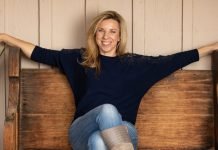
“One of my favorite parts of the job is getting to know people’s stories,” said Shannon Mitchell, MS, RDN (20), “just getting to be alongside people’s journeys and really getting to see that transformation of becoming nourished. Sometimes you really see a difference in someone’s outlook and their health.”
Mitchell is a registered dietitian nutritionist who has served for several organizations around southern California. She currently works in the eating disorder and mental health sectors to help people develop healthier diets and food habits — even amidst steep health challenges.

“I really like working in the sector of nutrition,” Mitchell said. “There’s a lot of things you can do, which I find very exciting, and one of the reasons I wanted to be a dietitian.”
As an interpersonal field, dietetics offers a variety of settings for working with patients and clients to improve their health. Mitchell described two capacities in which she’s served: inpatient, in which a patient is admitted to a healthcare facility, and outpatient, which serves patients who are staying at home but come in to receive care. While inpatient care is often fast-paced, Mitchell enjoys the more relational aspects that come from outpatient work.
“I think there’s something really special about outpatient, the way you can spend a lot of time getting to know someone, and figure out how to support them on a slightly longer term basis. In the hospital, you have maybe 10 minutes with somebody.”
Mitchell remembers having a fascination with food from an early age.
“I’ve always had an interest in food and nutrition. I think I had a really food-positive environment that I grew up in.”
“Food was just a really joyful thing growing up, something that connected people, something that was a positive aspect of life, and celebrations, and social gatherings. I think when I started to learn about nutrition, I became fascinated and loved learning.”
She remembered choosing nutrition-related topics for science fair projects in elementary school. That passion didn’t waver when she was considering her plans after high school.
“When I decided what I wanted to study for college, I learned about dietetics. I didn’t know it was a thing — I just thought you studied nutrition,” she said. “But [with] dietetics, I learned there’s a lot you can do. The registration opens up a lot of doors in different fields. There are so many different settings that need dietitians.”
PLNU was the first school Mitchell toured, and she was immediately drawn to the campus culture. Although she explored other options, as she put it, “once you go there, you know there’s something special.”

“I think there is something really special about Point Loma, both culturally and academically,” Mitchell said. “I think I really did like that there is a faith foundation at the school. I liked that the class sizes were small, so I could have more support. I really think I received that, especially in the dietetics department.”
The scholarships she was offered and four-year study track gave her the confidence that she would find success at PLNU, and were two aspects she did not see at the state schools she considered.
Mitchell also benefited greatly from the close support of professors. She enjoyed when some professors began class with a prayer, worship music, or scripture reading. One biology class she was frequently the last student to finish exams, and she was encouraged that it was OK to take her time. During a nutrition class, another professor who sensed a majority of the class was stressed, tired, and had a hard time focusing, decided to carve out a few minutes of class to allow the students to relax, meditate, and unwind.
“From a student perspective, it means a lot when the professor’s looking out for your well-being, and practicing something that will help you feel better.
“That kind of approach is really relevant in the work I do, because people tend to become very activated, and we have a lot of hard conversations. Meeting people where they’re at and providing that space to kind of regulate and come back to a conversation later, I think that ties in.”
“I think there is something really special about Point Loma, both culturally and academically. I think I really did like that there is a faith foundation at the school. I liked that the class sizes were small, so I could have more support. I really think I received that, especially in the dietetics department.”
Outside classes, Mitchell also was able to spend time in activities that invested in the lives of other students.
“Being involved in campus life was something [that was] really important to me,” Mitchell said. “I think being part of the campus ministry was really formative to my college experience.”
After graduating PLNU in 2020, she went on to earn her M.S. in Nutrition and Dietetics from Texas Tech University, and finally her Registered Dietitian Nutritionist certification to begin practicing.

“We really [connect] with why someone wants to change their diet,” Mitchell said. “Is it because they’re having physical consequences of not eating a sufficiently varied diet? Is it because they want to be able to travel and know that there’s something for them to eat, no matter where they go?”
Sensitive to their nutrition and health goals, Mitchell works closely with patients to adjust their diets in comfortable and lasting ways. “Food chaining” is one strategy she described to expose patients to unfamiliar foods. Patients start by eating a food that’s “within their realm of acceptable foods” they’re comfortable with eating. Then, Mitchell guides them to stretch to unfamiliar foods (or “goal foods”) to help them become comfortable with new or more diverse eating options.
“We’ll do exposures with patients’ consent,” she said. “It’s where you intentionally expose yourself to something that is unfamiliar; you’re teaching your nervous system it’s something you can survive, and something you don’t have to avoid.”
One common misconception is that patients that dietitians work with are “picky eaters” or have poor impulse control. In fact, dietitians have to account for many interconnected physical and mental considerations. Practices such as food chaining can help patients realize they’re stronger than they previously thought.
“I get to talk about nutrition all the time, and I love talking about it; I love learning about it. Getting to talk about it all the time doesn’t get old for me.”
“In eating disorder treatment, a lot of the time people do have very strong fears, aversions, and restrictions on the things they are able to eat comfortably,” she said. “Something that we do is kind of explore what the client really wants.
“I think autonomy is something we really try to push. That’s something that can be hard to prioritize sometimes in the mental health space when people are forced into treatment against their will—things like that.”
In addition to connecting with patients and making their lives better, Mitchell finds a lot of fulfillment in being in a setting that celebrates how food can bring good into the world.
“I think connecting with other dietitians is really cool because they tend to like food too. There’s a lot of dietitian potlucks, and there’s always food at our events. It’s just a very food-positive environment.
“I get to talk about nutrition all the time, and I love talking about it; I love learning about it. Getting to talk about it all the time doesn’t get old for me.”