This story is part of the Viewpoint’s series sharing perspectives from the President’s Cabinet members on topics related to their areas of expertise and service.
There are powerful stories of generosity in the Bible. Jesus pointed out the widow who gave two small coins that were “all she had to live on” (see Mark 12:41-44). Another widow shared the last of her flour and oil with Elijah when she had planned to use it for a last meal for herself and her son (1 Kings 17:8-16).
For PLNU Vice President for University Advancement Heather Cordell, one story about giving that stands out is from John 12. In this chapter, which follows Jesus resurrecting Lazarus from the dead, Mary, the sister of Lazarus, anoints Jesus with a jar of expensive perfume.
“There is a dinner party in honor of Jesus taking place. Martha is busy in the kitchen. Lazarus is at a table full of guests with Jesus,” Cordell explained. “In the midst of this party, Mary takes a bottle of pure nard oil, breaks it at the feet of Jesus, and uses her hair to anoint him. This story is often seen through the lens of Mary foreshadowing Jesus’s death and burial, but I think there is also much to learn about the heart of generosity from this extravagant act of worship. The bottle of pure nard was the equivalent of one year’s salary. Some experts believe this was likely Mary’s dowry. This is such an extravagant act of generosity — it almost doesn’t make sense. But she’s able to do this because in the previous chapter, she watched Jesus raise her brother from the dead on the fourth day. She’s watched him do this incredible miracle and as a result of seeing the impossible, Mary now puts all of her hope and everything she has, literally, at the feet of Jesus in this beautiful, extravagant form of worship and generosity.”
Cordell notes that part of what she loves about this story is that it reminds us of our dependence on God.
“In a world where we are so independent, and we’re conditioned to think, ‘I can do everything on my own,’ generosity allows us to be dependent on the Lord in a tangible way. Giving reminds us that ultimately the Lord gives, the Lord takes away, and the blessings we have, they are genuinely from the Lord. Because we can trust the Lord, we can freely give back as well.”
The Wesleyan-Holiness tradition emphasizes that creation itself is a witness to God’s grace and part of God’s redeeming work. From the beauty of each sunrise to the breath of life, God has given gifts to His people from the very beginning of creation. Romans 1:20 reminds us that all of creation testifies to God’s power and divine nature. Creation also demonstrates God’s abundant, generous love.
Our own generosity allows us to express our love back to God. It follows in His example. In addition to the gifts of creation and the blessings God provides in our daily lives, God gave the ultimate gift when He sacrificed His own son for humanity’s salvation. When we are generous to God and others, it can be a natural, joyful response to all we have been given.
“Generosity allows us to be dependent on the Lord in a tangible way.”
The Bible shows us that there are multiple ways to give — through regular tithes and offerings, through sacrificial giving, and by offering our time, talents, and possessions to God and others.
Cordell’s own story has been marked both by being a recipient of generosity and a practitioner of it. Her experiences have helped inspire her career in philanthropy. Cordell came to Point Loma in the fall of 1997 as a social science major. She planned to teach at the high school level. Then in the second semester of her junior year, Cordell applied for and was awarded a history and political science endowed scholarship. The scholarship allowed her to study abroad the following summer.
“I spent the summer of 2000 in France, where I studied art history and French. It was this incredible opportunity that unlocked the world for me and gave me a much bigger worldview. Through that experience, I began to see gifts and talents in myself that I did not know existed or had not used. I discovered I was resourceful and creative. Ultimately, through a series of events, it led me to my current career in philanthropy that has spanned the last 20 years. I don’t know who the donor was that gave to PLNU, but being the recipient of that scholarship changed the trajectory of my life.”
Receiving the scholarship and the study abroad experience weren’t the only times Cordell was impacted by donors during that season of her life. During her junior and senior years at PLNU, her father was diagnosed with leukemia.
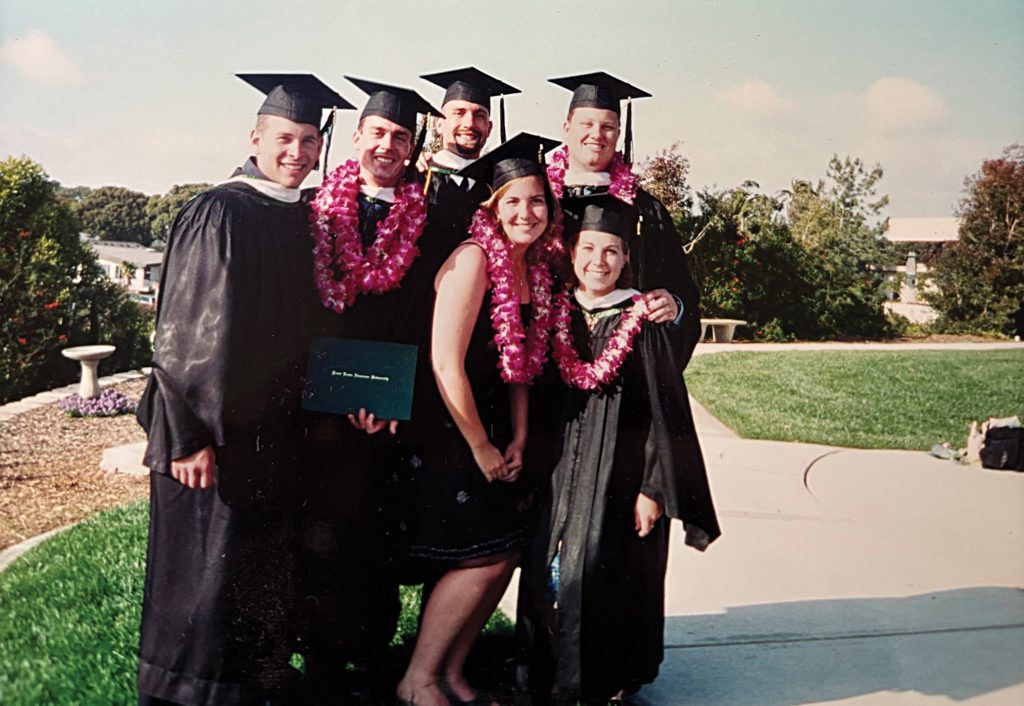
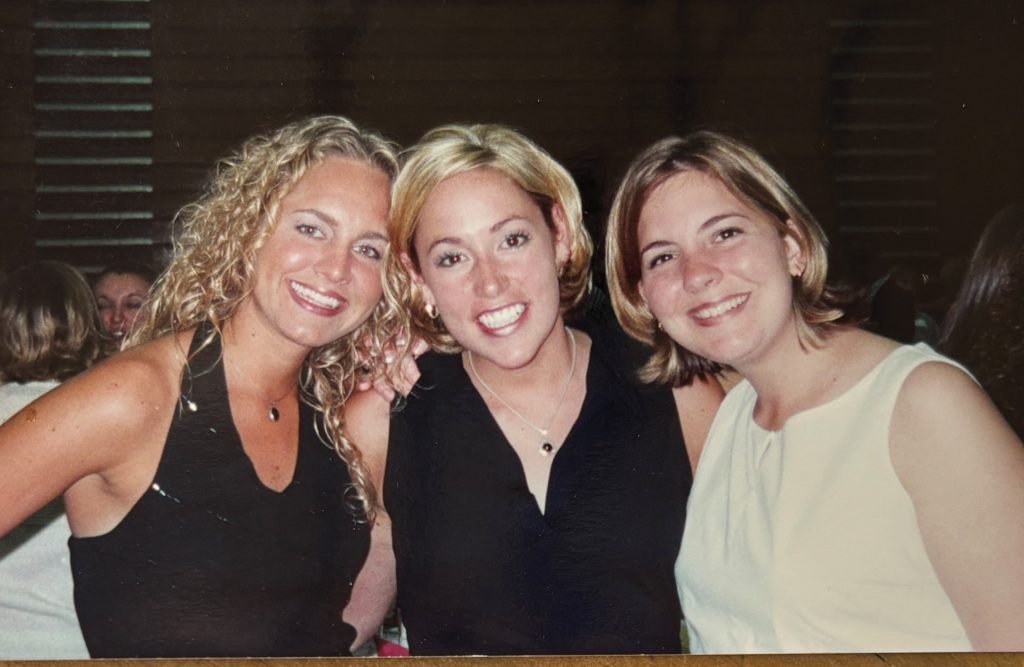
“My dad was a patient at City of Hope, which is an amazing cancer research hospital in Southern California,” she said. “I saw firsthand that the generosity of donors helped make a way for the high level of care our family experienced. In addition to having access to cutting-edge medical care, there were deliverables that would not have been covered through insurance, such as on-site living accommodations for our family, while my father underwent multi-week treatments. That experience gave me a deeper understanding of the donors who supported the hospital and made my family’s experience possible. It planted a seed in me, a sense that perhaps I could one day contribute to that kind of meaningful work.”
Cordell’s positive experience at City of Hope inspired her to consider a career in healthcare fundraising. After college, she spent time working in hospitality and events but maintained her interest in fundraising as a career.
“Eventually, there was an opportunity that bridged my background in event management with the desire to go into development,” she said. “That’s when I took my first job in development as an event planner at a faith-based institution. I’ve been fortunate to gain broad experience in advancement work prior to coming to PLNU. Over the years, I’ve held a variety of roles in development — from serving as a gift officer to leading planned giving programs, and serving in cabinet-level leadership. I’ve also had the opportunity to help lead and launch two comprehensive campaigns, both of which significantly expanded the resources available to the universities I served at. I especially enjoy the momentum a campaign brings to the life of a university. Campaigns create a unique sense of energy and focus, aligning multiple departments around a shared strategic plan and goals.”
After working at Biola University and Azusa Pacific University, Cordell has now come back to PLNU to lead the university advancement team at her alma mater. With her experience and the opportunity to join President Fulcher near the start of his time as PLNU’s 15th president, Cordell feels great excitement for what is ahead.
“It has felt like the dream opportunity to bridge my experience from the past two decades and return to Point Loma, a place that had such a big impact on my formation,” she said.
Some people might find a career in fundraising intimidating, but for Cordell, it is an opportunity to help people fulfill their own dreams and to partner in work God is already doing. That’s what fuels her passion for her work as well as her own personal giving.
“My job is to partner with families to understand the impact they are hoping to make in the world and for the kingdom and to see if there are opportunities for them to fulfill those goals at Point Loma,” she explained. “Oftentimes it is a blessing for the donor when they have the opportunity to extend their generosity to something the Lord has already put on their hearts. It’s a really beautiful moment when that happens. I don’t think of the work that I do as transactional; rather, I see it as extending an invitation for people to partner in the work that God is already doing.”
When Cordell invites people to join in supporting God’s work at PLNU, she enjoys giving people the opportunity to respond to something God has put on their hearts. She doesn’t worry about competition from other universities or nonprofits.
“There’s no scarcity in the kingdom of God,” she said. “God provides abundantly. We don’t need to be in competition with other universities or with other ministries. God will certainly provide for Point Loma in the same way that he’s going to provide for other institutions.”
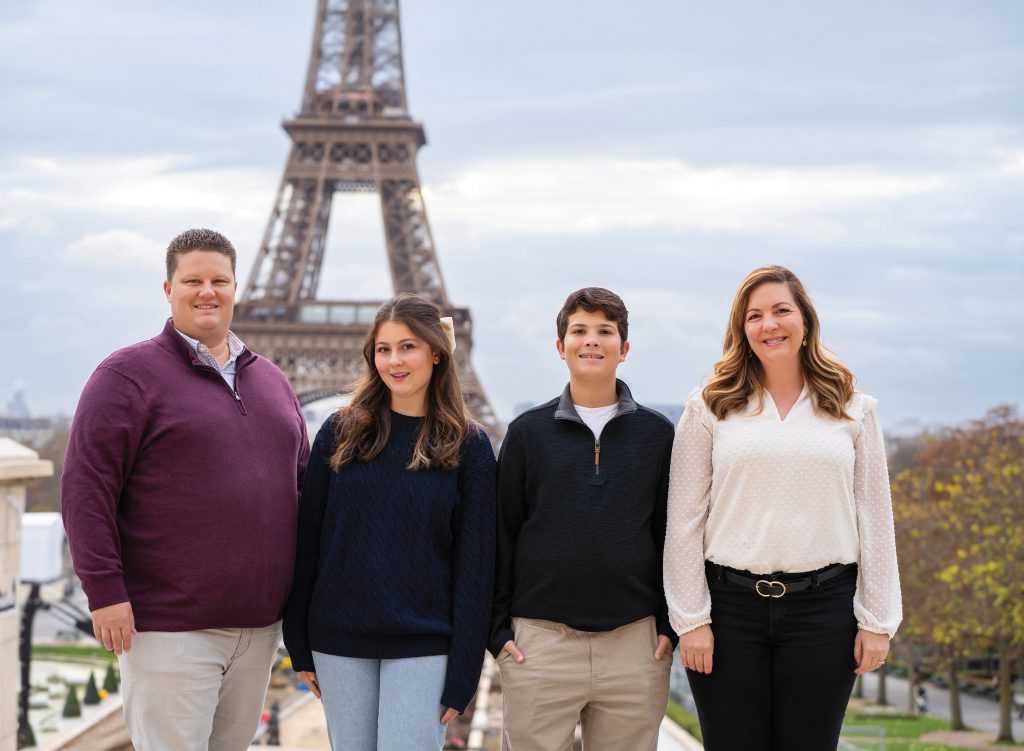
For her and her husband, Mark (01), giving decisions and actions are always rooted in prayer and are often connected to relationships. They also make decisions about giving and spending based on what is important to them, and that is something they share with their children.
“We have tried to be in conversation with our kids since they were little to teach them: ‘These are the things we value as a family.’ This allows us to say yes to a few key areas, but we can freely say no to other areas based on our family values,” she said.
Making wise financial decisions based on values is part of the idea of stewardship. Having margin in your budget so that you can respond generously when God presents giving opportunities creates joy and freedom, Cordell explained. By practicing good stewardship, people can be more abundantly generous.
For those ready to begin the practice of giving for the first time, Cordell recommends starting out by giving small amounts frequently.
“Don’t underestimate the impact of giving small amounts over years.”
“What this does is it builds up the muscle for generosity,” she said. “I like to encourage families to be thinking about the handful of areas they want to support on a monthly basis. Maybe that’s your church, a ministry, and your alma mater.”
Giving regularly creates a relationship between the donor and the organization. Donors hear about the impact of their gifts and learn more about the places they are supporting. They become part of a special group of people who sustain something valuable. They become people on whom the organization can depend. This process creates greater dependency on God’s provision.
“Don’t underestimate the impact of giving small amounts over years,” she said. “Throughout my career, I have seen people who give consistently and at certain moments in their lives have opportunities to make larger ‘major gifts,’ but even their faithful, regular gifts are highly valuable.”
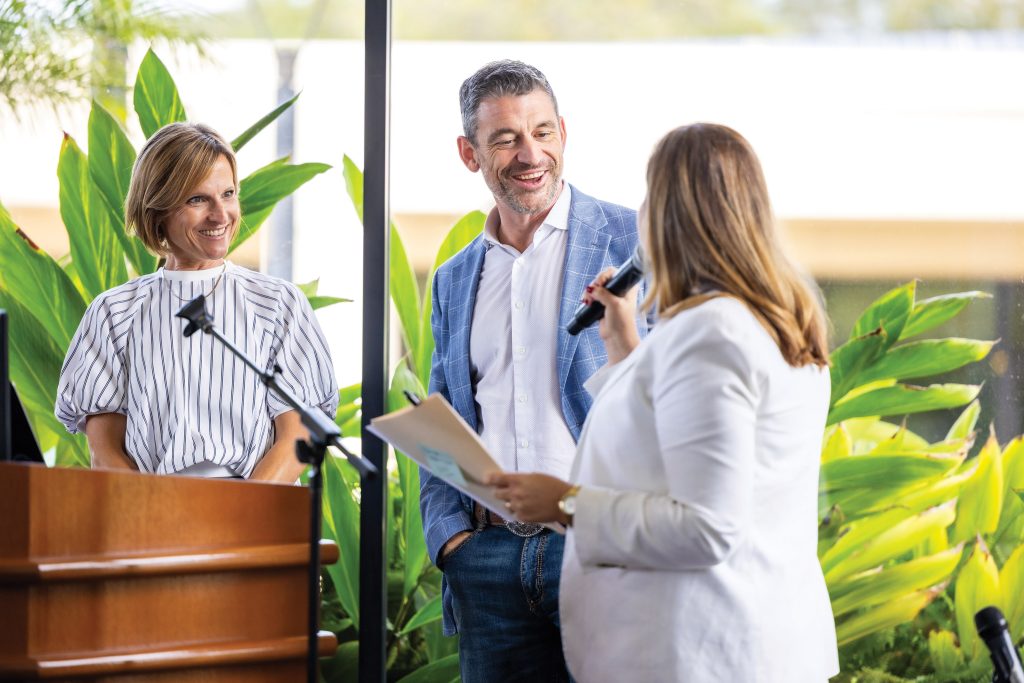
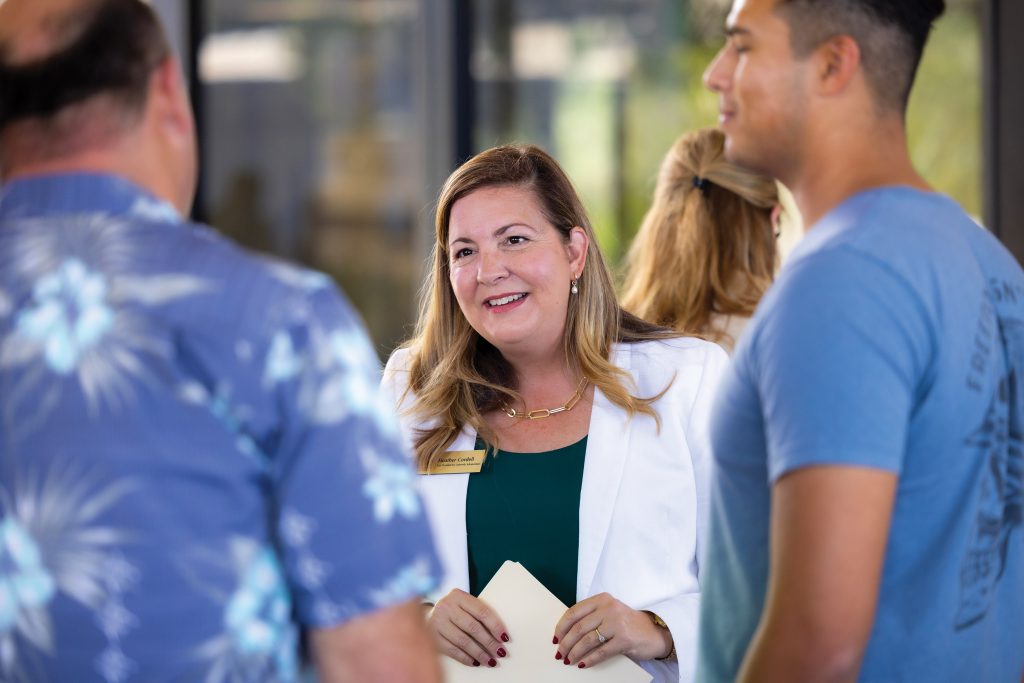
Families and donors gathered during Family Weekend for the Faithful Families luncheon, hosted by Cordell and the Parent and Family Connections team. Pictured to the left are current parents Greg and Lesley Mundis. Cordell wants people to realize that whatever they can give, their generosity matters. She used PLNU as an example, sharing that so much is possible beyond what tuition can provide because of the generosity of the university’s donors.
“Your giving to Point Loma makes a big impact,” she said. “Part of the university’s budget for scholarships is made possible because of the generosity of donors who give to the Loma Fund. The Loma Fund helps provide scholarships that directly impact a student’s ability to afford PLNU. It provides funding for faith formation programs, including chapel and discipleship, and the overall maintenance of the university’s premier facilities. There are also endowed scholarships— such as the one I received as a student. Endowed scholarships fill in the gap between what families can provide and what the institution provides. Lastly, we have special projects on campus, such as the Keller Art Complex renovation and groundbreaking for the new Lawrence Ryan Fitness Pavilion, which are made possible through the generosity of donors.”
Cordell noted that many of PLNU’s donors give because they love the university, they love the students, and they remember their own life-changing educational experiences. Their goal is to ensure others have this opportunity and to take certain things “from good to great.”
Talking about giving and stewardship doesn’t have to be uncomfortable or intimidating, as Cordell demonstrates. Her enthusiasm is because of her firm belief that being generous is a natural response to God’s goodness. As a result, helping others express generosity and thanksgiving brings her great joy. That God gives joy back to Cordell and others who give faithfully is a reminder that we give because he gave first.