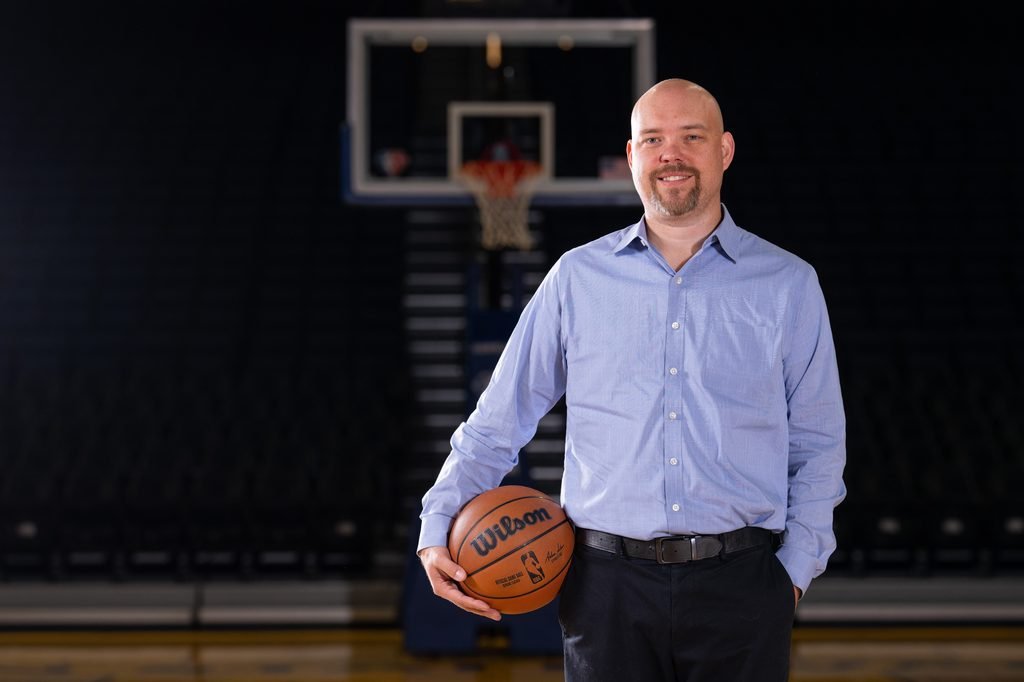
Long before he was bringing thousands of fans to their feet at Chase Center, Scott Heitman (05) was trying to keep track of balls and strikes for the San Diego Padres. Like many broadcast professionals in sports today, Heitman’s entry into the world of media started with a senior-year internship. Alan Hueth, professor emeritus of media studies at PLNU, was a key supporter.
“Dr. Alan Hueth was instrumental in getting me connected with TV broadcasting with the San Diego Padres my senior year,” Heitman said. “That’s what really set me on my path of sports and video production.”
After Heitman graduated in the spring of 2005, he continued to work for the Padres organization as a freelancer in production. In addition to the all-around help he offered, he was also in charge of creating the graphics that showed balls and strikes during live broadcasts.
“When I was working with the Padres, I fell in love with the technology of production and how it all worked together,” Heitman said. “I worked closely with the other engineers and ended up asking one of them how I’d be able to get into the engineering side of broadcasting.”
On his coworker’s recommendation, Heitman applied and was accepted to the broadcast engineering program at Napa Valley College. Long regarded as one of the best programs in California, Napa Valley College’s broadcast engineering degree had an extremely high hiring rate upon graduation, with many students being approached with job offers before they graduated.
While the program no longer exists in the same way today, the robust community college in Northern California is still highly regarded for its other degrees in engineering as well as film, broadcast, and electronic media.
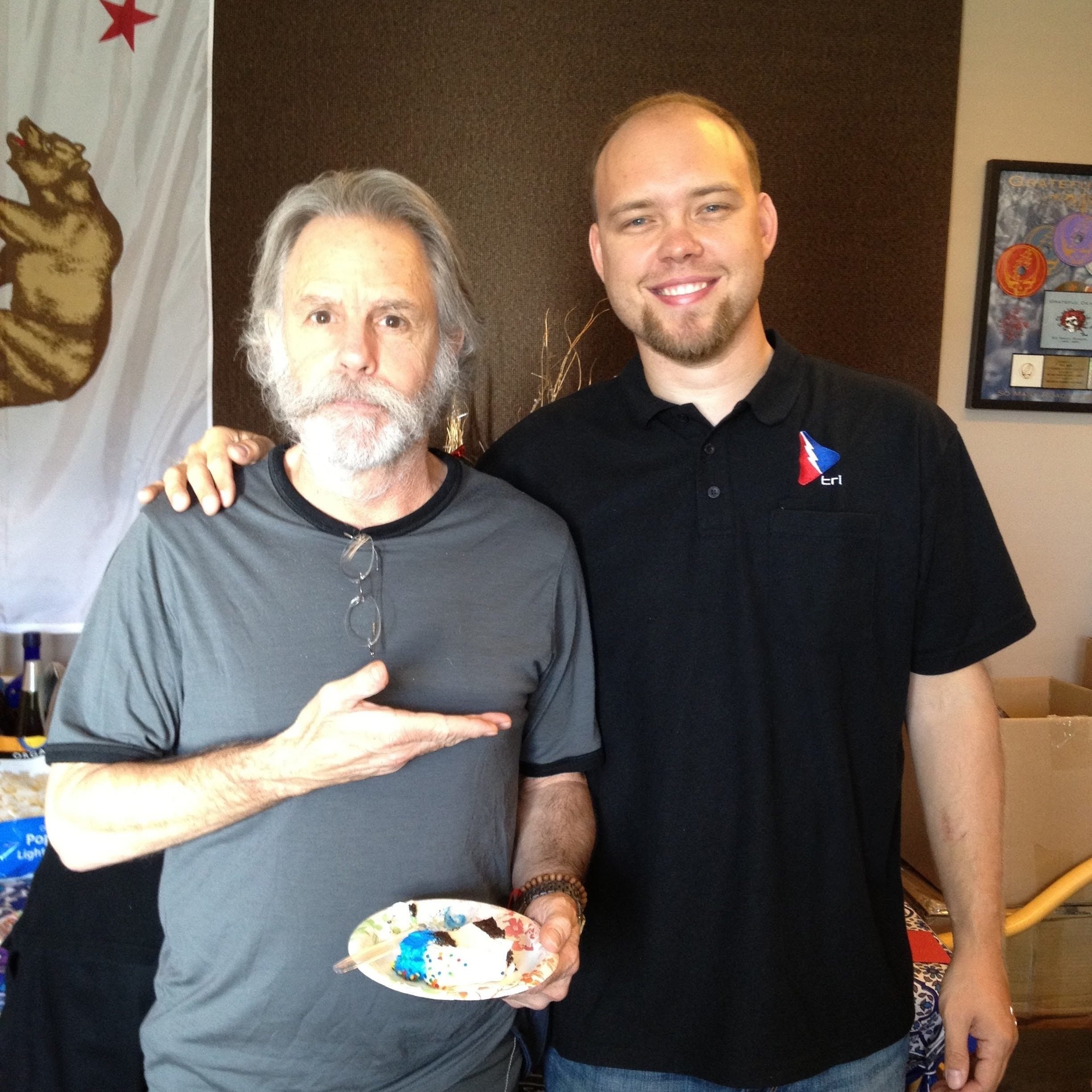
Shortly after he graduated from Napa Valley College in 2011, Heitman was hired at a recording studio owned by Bob Weir, founding member of the band The Grateful Dead.
“He had plans to open up a state-of-the-art studio featuring live video streaming,” Heitman said. “And this was way before live shows on the internet, so we were one of the first to bring that experience to the fans. They called it the Couch Tour.”
“I learned so much during that time, especially about video production. every day it would be a new band and it was a really fun atmosphere.”
Fans who were interested in watching the shows would subscribe to the stream and watch their favorite bands play live from their living room couches.
“I learned so much during that time, especially about video production,” Heitman said. “Every day it would be a new band and it was a really fun atmosphere.”
The Couch Tour hosted greats like Carlos Santana, Huey Lewis, and Sammy Hagar. Toward the end of his time working at Weir’s studio, Heitman was also witness to one of the great band reformations of the time.
“Journey had just reformed with their new lead singer and decided to use the studio for a month to rehearse,” Heitman said. “I was there with them every day getting to know the band, watching their process and seeing them rehearse those legendary songs. It was really cool.”
After a year with The Couch Tour team, Heitman learned about an opportunity in broadcast with the Pac-12 network.
“I’d heard that the conference was starting up their own TV network featuring all 12 schools,” Heitman said. “There was a brand-new facility in San Francisco they’d be working out of, so I applied.”
Heitman was hired on as a broadcast engineer a few weeks later and began working on one of the most aggressive broadcast schedules of his career.
At the time, the Pac-12 featured 12 schools and Heitman and his coworkers were responsible for producing 850 events every year across seven TV networks.
“We would produce all the Olympic sports as well as the typical big college sports,” Heitman said. “A lot of the sports we would show wouldn’t normally get to see the light of television and it was great for the student-athletes to have their events televised. I loved getting back into sports after doing the rock-and-roll thing.”
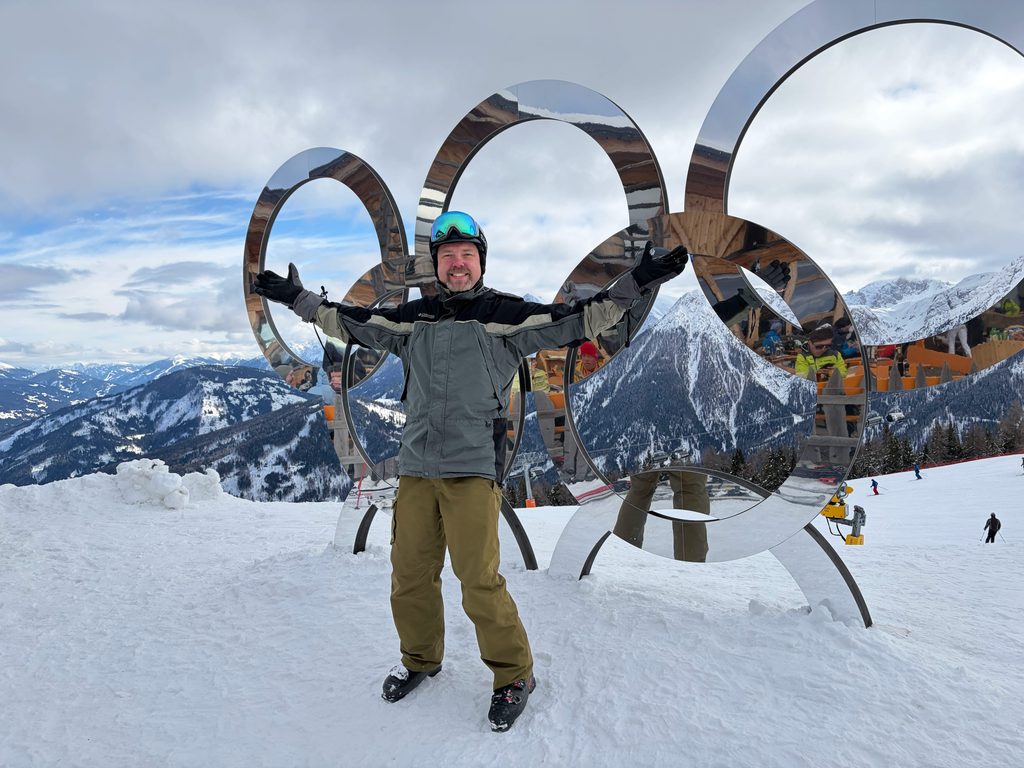
Heitman was able to put all of his experience to good use right away, traveling with the engineering team to make sure each school and venue had the right transmission equipment.
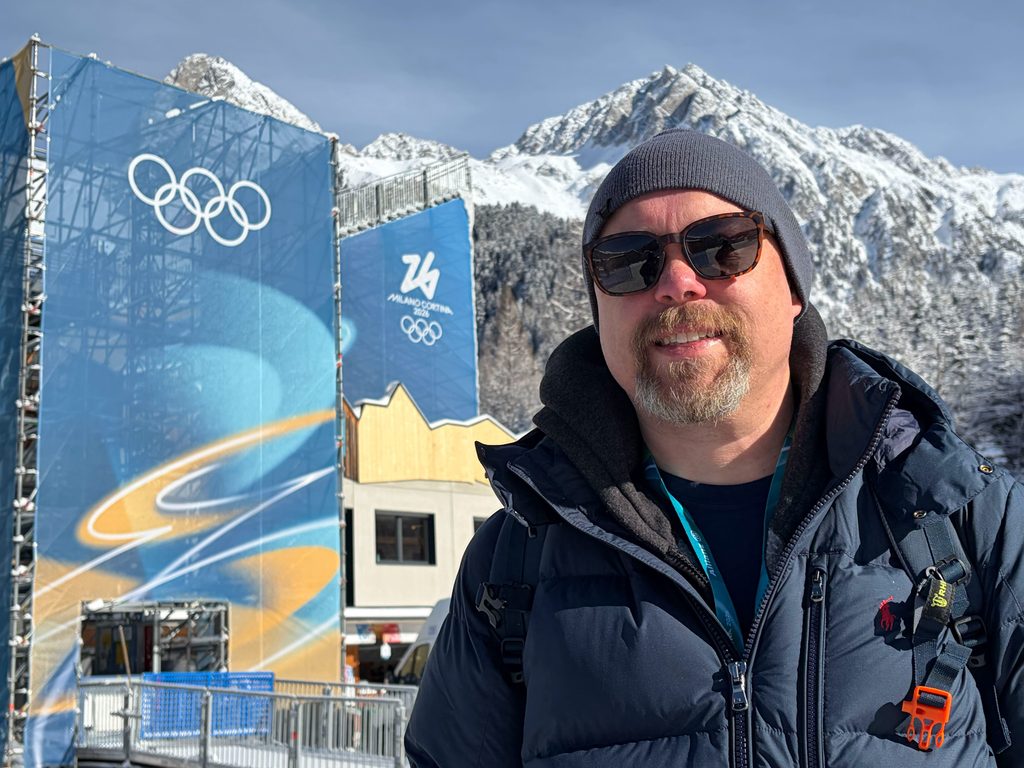
“Getting to visit all the different locations of these big programs in these giant football stadiums for the gameday setup was my favorite part,” Heitman said.
And after three seasons working with the Pac-12 team, he and the staff were able to develop a remote production system that allowed them to cover events via control rooms based in San Francisco.
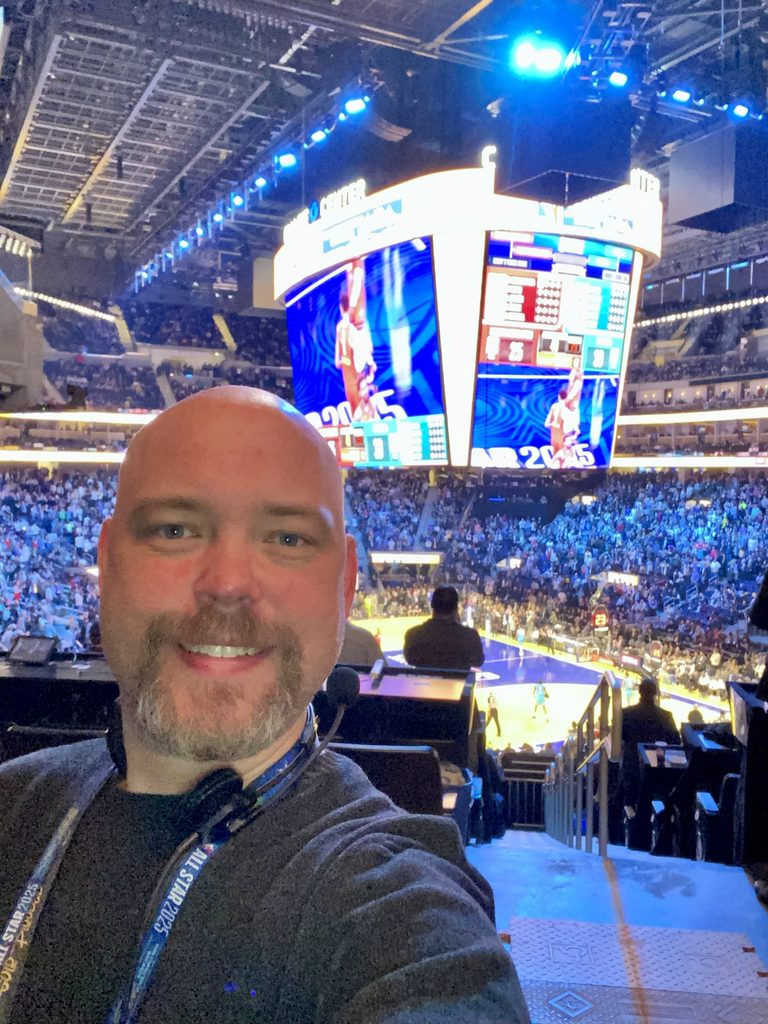
“All the schools needed was cameras and microphones,” Heitman said. “That’s how we were able to produce so many events while saving on costs…[and] we put our own spin on it so it could certainly stand up right there with ESPN.”
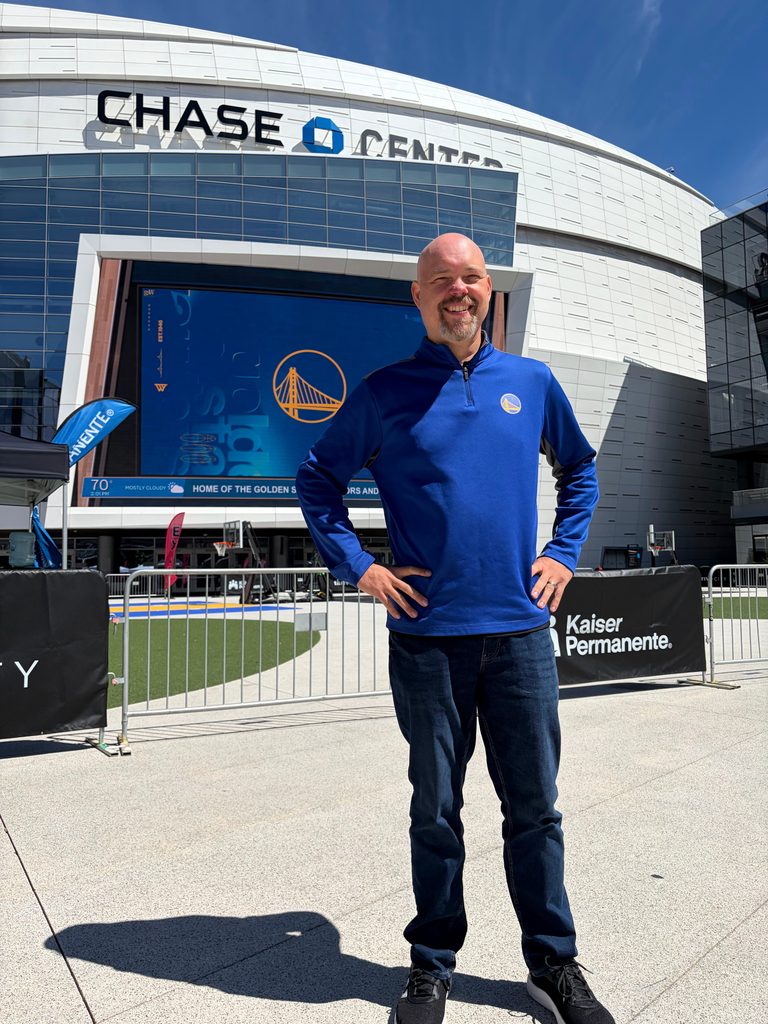
Eventually, Heitman worked his way up to senior manager of technology support for the Pac-12 network. A role he occupied until 2019, when a new opportunity presented itself: director of scoreboard operations at the brand new Chase Center, home of the Golden State Warriors.
Fresh off their third NBA championship in as many years, the Golden State Warriors made the decision to build a new stadium along the waterfront in the Mission Bay neighborhood of San Francisco. For Heitman, it was one of the biggest opportunities he had ever been presented with in his career.
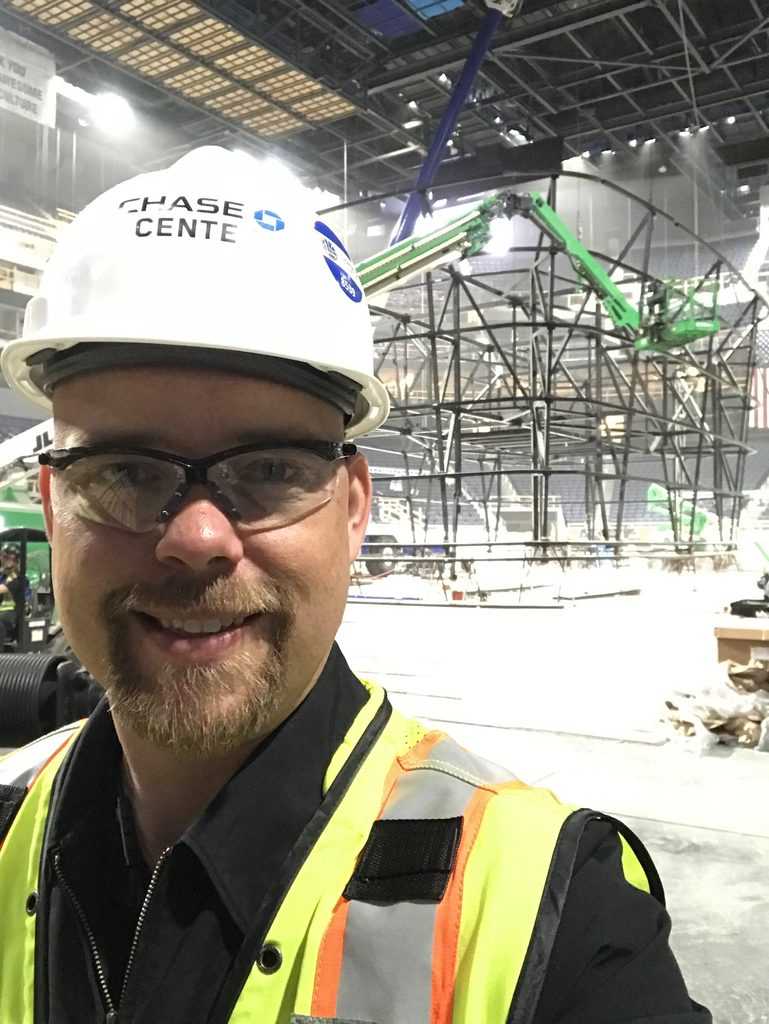
“I knew it was the chance of a lifetime to get in on the ground floor while the arena was still under construction and have a say in every aspect of the operations setup,” Heitman said.
He immediately jumped at the opportunity and started working with the Warriors organization in February 2019. With a short nine months between his first day on the job and the first stadium event in September, Heitman knew he would have to hit the ground running.
“That was the hardest work I’ve ever done,” Heitman recalled. “We were pretty much living here programming, installing, and hiring the people we would need. The clock was ticking, and they’re not going to push [opening day] back if we’re not ready.”
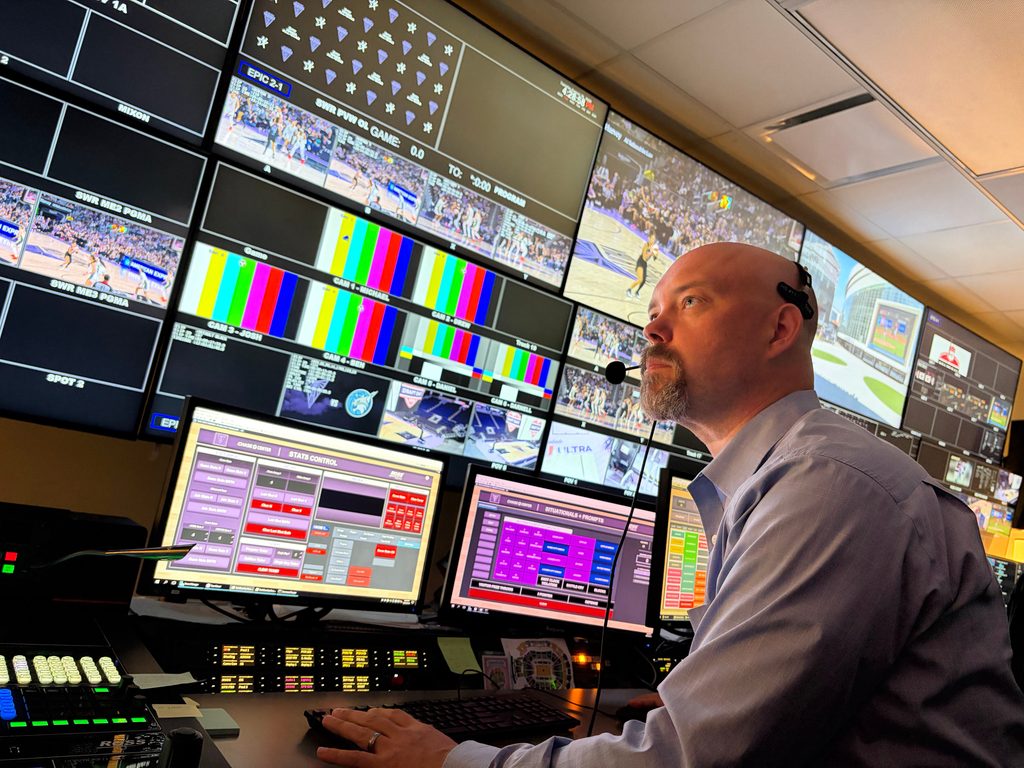
Heitman worked alongside every department in the stadium, from custodial to IT and food and beverage. He also had the chance to hire his own team, building his staff while he was working to create an exceptional broadcast experience.
“We were drinking from a firehose every day,” Heitman said. “I lived here for several months to get it all up and running.”
Despite the turnaround time, Heitman and the whole team at Chase Center were able to meet their deadline and have the stadium ready for its opening event, a concert featuring Metallica and the San Francisco Symphony on September 3, 2019.
Now, seven years later, Heitman has done everything from hosting the NCAA March Madness tournament to participating in the NBA Championships parade next to the victorious 2022 Golden State Warriors team.
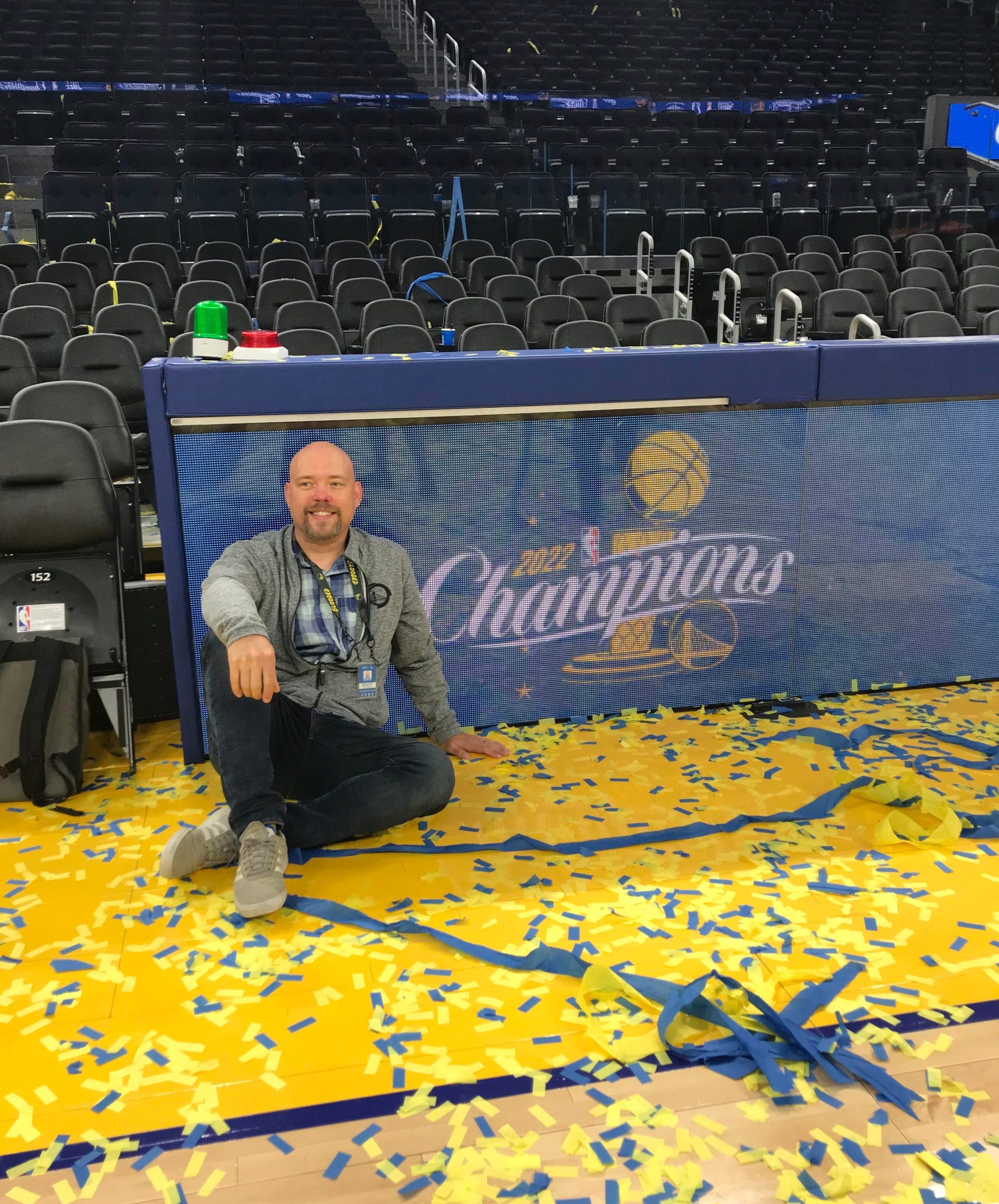
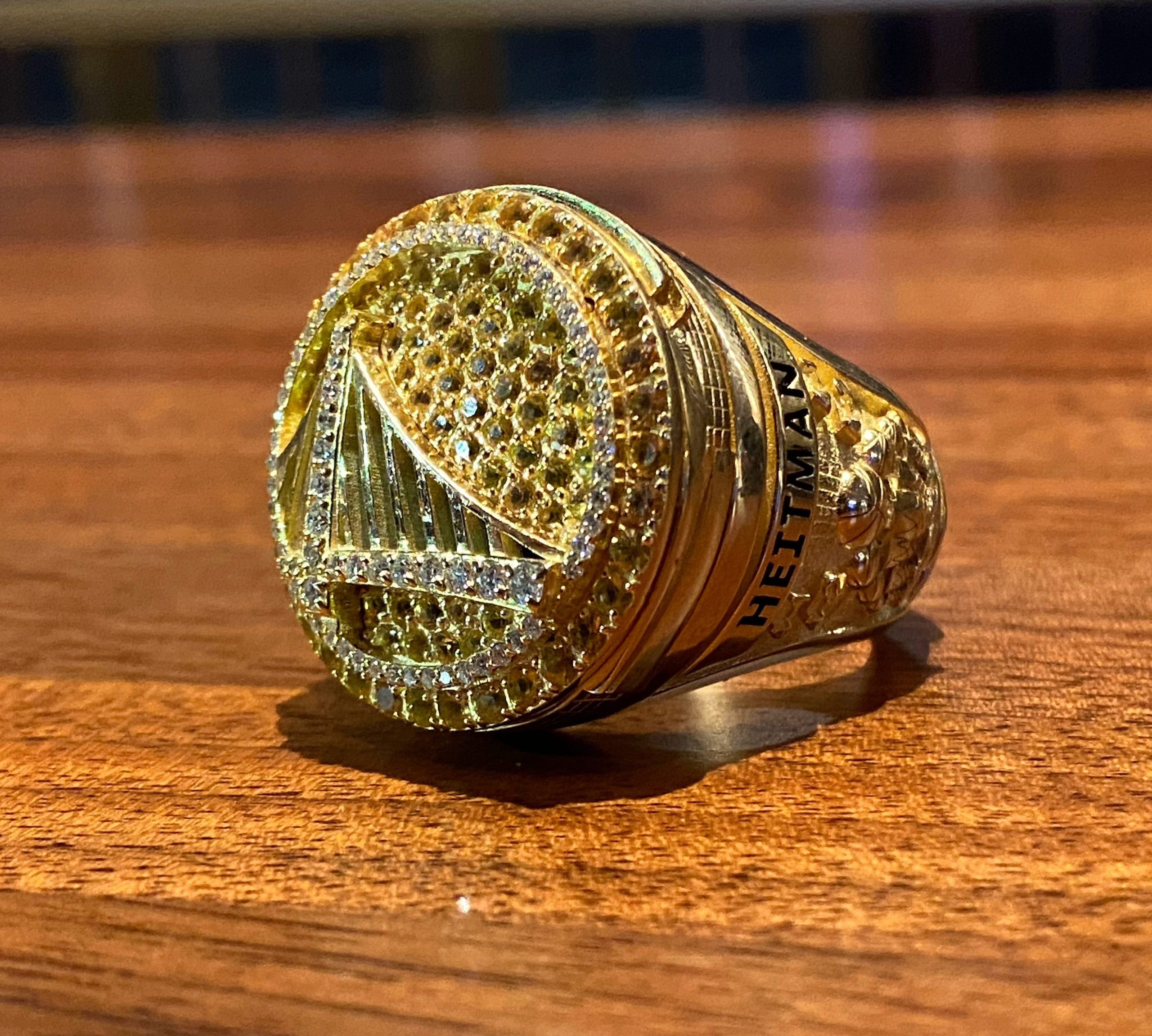
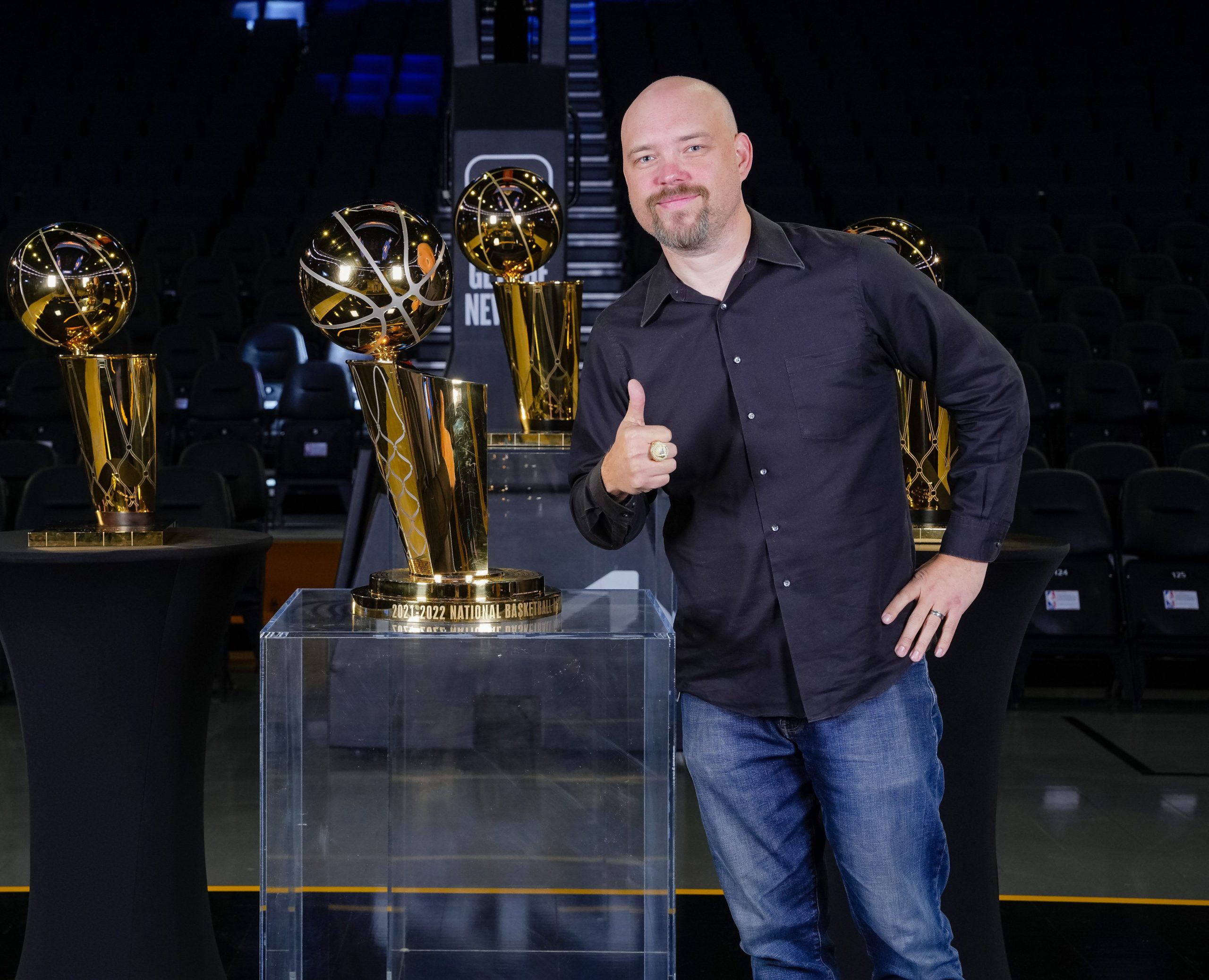
“It’s been a huge honor…it’s amazing to look at what we’ve accomplished in that time,” Heitman said. “Getting a championship ring and then getting to launch a brand new expansion team in the Valkyries has been really rewarding.”
“I’ve seen everyone level up [on my team] and we’ve all learned together,” Heitman said. “It was the hardest work to open the arena and it’s still hard work every day, but we love it.”
With well over 400 events now under his belt, Heitman and his team have certainly found their groove. One of his favorite aspects? The fan connection.
“Going from TV broadcast to in-venue means we get to connect with the fans in real time,” Heitman said. “You can hear the energy of the crowd and see the things they like…you directly influence the energy in the arena.”
And for Heitman, it’s more than just an opportunity to cover an event well. He takes pride in keeping his standards high and expecting an elite production from everyone on his team.
“We all know the phrase, if you find what you love you’ll never work a day in your life, but I actually think if you find what you love, you’re probably going to work harder at it than anything else in your life,” Heitman said. “From leadership to ownership, the investment in our careers is high so we have very high standards for ourselves. We want to show up every day and put in that 100%.”
“We all know the phrase, if you find what you love you’ll never work a day in your life, but I actually think if you find what you love, you’re probably going to work harder at it than anything else in your life.”