This fall, PLNU unveiled a new Christian icon, the Transfiguration of Creation, now on display in Ryan Library. The installation reflects PLNU’s longstanding commitment to exploring the connections between faith and science.
An icon is a specific type of religious painting that is common in Christian traditions, including the Eastern Orthodox Church. That’s the denomination Dr. Andrew Nosal, associate professor of biology, grew up attending.
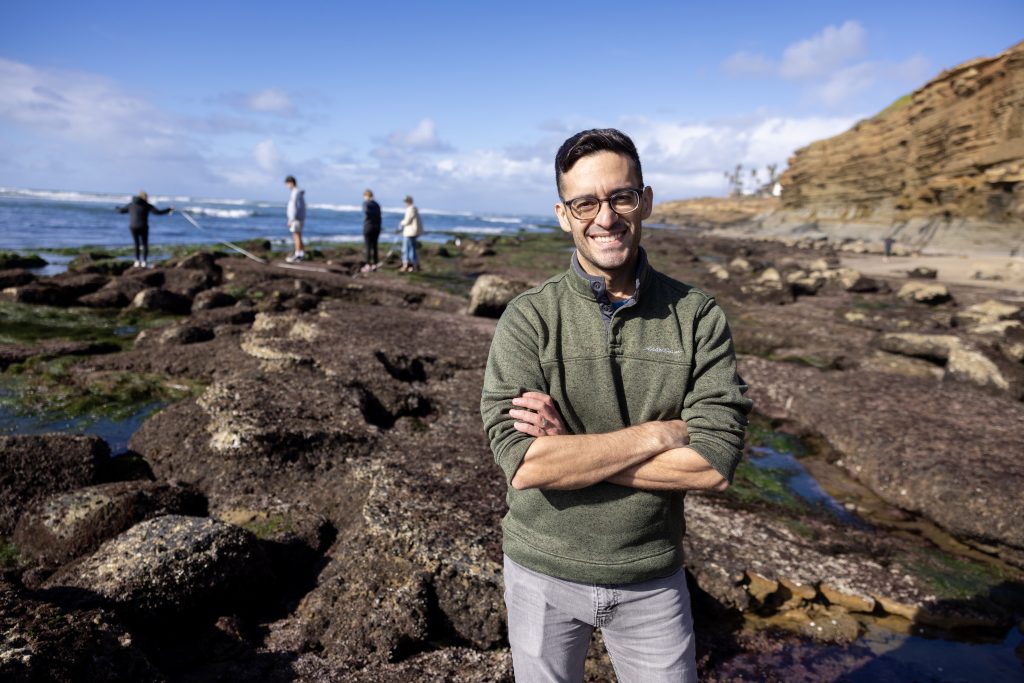
“Icons are a spiritual tool to help focus us when we’re praying or worshipping,” Nosal explained. Icons are typically made in a pre-Renaissance, Byzantine style, he explained. “Icons continue to be made in that old tradition because the abstractness actually lends itself to the mystery and the divine. So it’s a very recognizable style of Christian art.”
Nosal has been the driving force behind the new six-foot by four-foot icon now housed at PLNU. As a biologist, Nosal was always particularly drawn to icons depicting animals and creation.
“What I always noticed was that the existing icons of creation basically depict the six-day Genesis narrative, but then stop right there,” he said. “I’ve always felt that creation was not just an origin story. Creation continues to unfold, and that story of creation, it’s going somewhere. And I felt like where it was going, which is to Christ, was never captured in any existing icon of creation.”
Beginning in 2023, Nosal worked with renowned iconographer artist Aidan Hart of the UK to create the new piece. The icon includes imagery from the creation story of Genesis as well as changes to creation over time.
Seeking to fill that gap, Nosal had the idea to commission a new icon of creation.
“What I told the artist was that this should be an eschatological vision of creation — in other words, viewing creation through the lens of the end times. That doesn’t mean that the image has to be apocalyptic, but creation is going somewhere, right? It is destined to be unified in Christ, and I wanted to capture that somehow.”
Beginning in 2023, Nosal worked with renowned iconographer artist Aidan Hart of the UK to create the new piece. The icon includes imagery from the creation story of Genesis as well as changes to creation over time.
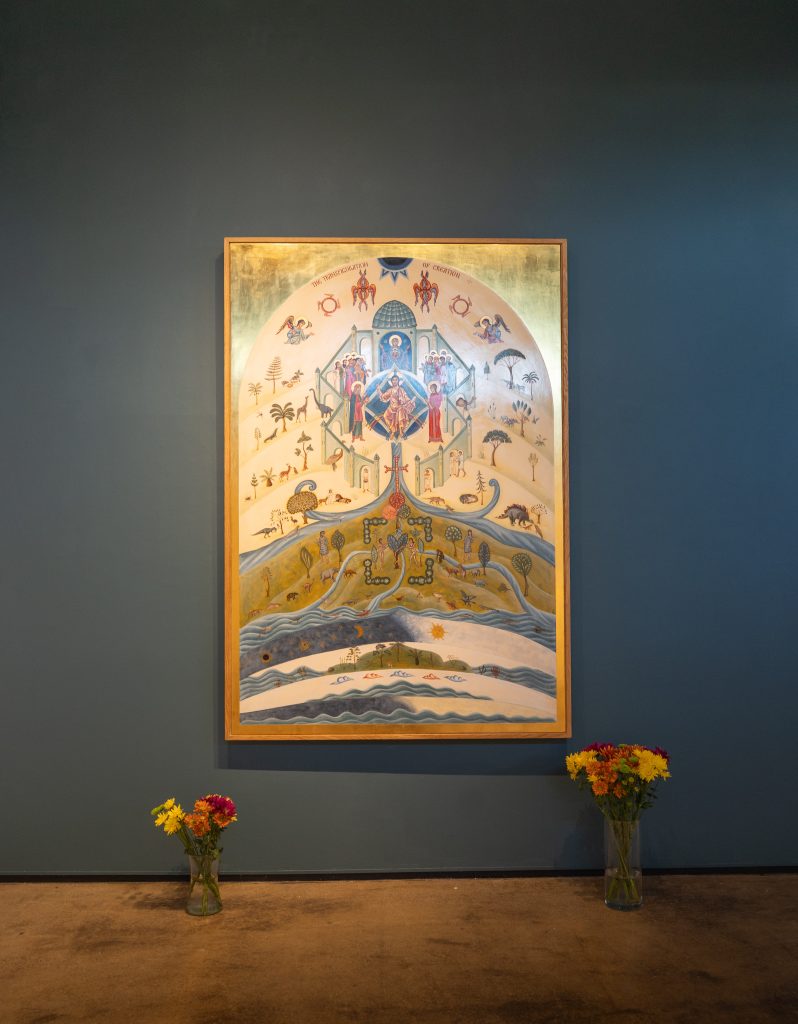
“We have not abandoned the six-day Genesis story, but at the same time when you look at the icon, you do see evolutionary themes — not that the icon affirms any particular mechanism of biological evolution, but it does affirm that creation changes over time … We include extinct creatures, like dinosaurs, because they are a part of the creation story, too. They are God’s creatures as well. We also have different angels that are there because God also created them. It’s very much this sort of universal, all-encompassing, cosmic vision of creation.”
Because of its unique approach, Nosal and Hart weren’t sure if what they were creating would be accepted as an official icon.
“Initially we were calling it ‘an icon-inspired mural,’” Nosal said. “As we continued to develop the design, it became clear that this is so well-rooted in traditional Christian theology and symbolism that it is an icon.”
“Point Loma has a long history of engaging science and faith,” Nosal explained.
They received affirmation when they sent the sketch and explanation of the icon to the Patriarch of Constantinople, the spiritual leader and representative of the Eastern Orthodox Church, who “responded with a letter endorsing and blessing the composition of the icon and its display at Point Loma Nazarene University,” Nosal said. That letter is currently in Nosal’s office but will perhaps eventually be on display in Ryan Library as well.
The Transfiguration of Creation could have been displayed at a church — and it did travel to Nosal’s church Saint Gregory of Nyssa Greek Orthodox Church in El Cajon, California, for a blessing from his pastor — but it was ultimately commissioned for permanent display at PLNU.
“Point Loma has a long history of engaging science and faith,” Nosal explained. “I became inspired by attending our weekly faculty faith and science reading group. Because I knew that this icon was going to blend insights from both Scripture and modern science, it felt appropriate that if Point Loma wanted it, it should be on public display here where [many] people will see it. It would be a source of inspiration and continued discussion.”
Nosal applied for and received a Wesleyan Grant from the university to develop educational materials to support the icon. The materials will include an informational placard and an interactive website.
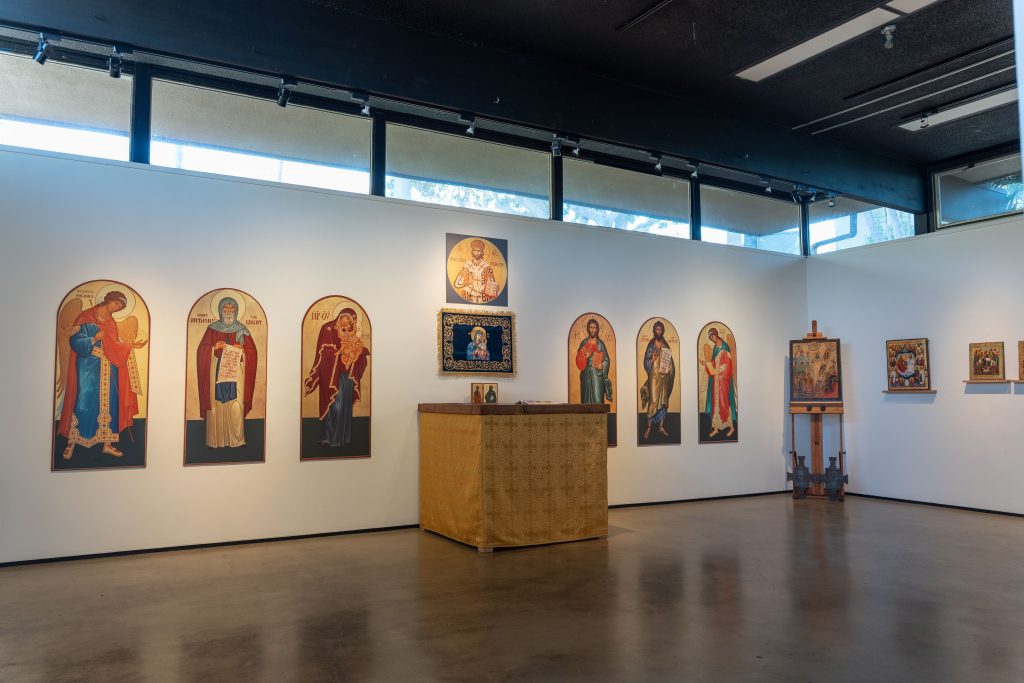
From October 2-5, PLNU hosted a series of events to celebrate the official unveiling of the icon. The PLNU community had several opportunities to hear from Hart, who traveled from England for the events, as well as from other Eastern Christian scholars and theologians. Keller Gallery hosted an icon exhibit, “Sacred Icons: Visions of Heavenly Glory,” which was curated by local icon collector Michael Roeder.
“For me, doing science is a way to get to know God,” he said.
Nosal hopes the icon will continue to inspire wonder, conversation, and reverence for God long after the unveiling.
“For me, doing science is a way to get to know God,” he said. “One of the ways we get to know God is, of course, through Scripture. Another is through the things that God has made, through creation. And so by studying creation, it is one way to get closer to God.”